My father named her after the Blizzard of 1966 that nearly blew his car off the road the day he brought her home. He wanted his children to grow up with a dog; whether he’d had his heart set on a malamute or if the breed just caught his eye around the time Dalene was born is anyone’s guess. “Alaskan Storm” was her registered name, but we called her Stormy. She was almost two when I was born and died when I was thirteen, having outlived my mother and brother and outlasted my first two stepmothers and one more brother, not to mention six or seven homes abandoned across Long Island, upstate New York, Colorado, Kansas. Of the twenty or so dogs I grew up with, she was one of two my parents euthanized. Two others were hit by cars and Trapper and Marsha died of heartworm under the house. All the rest were shot.
Dogsbody
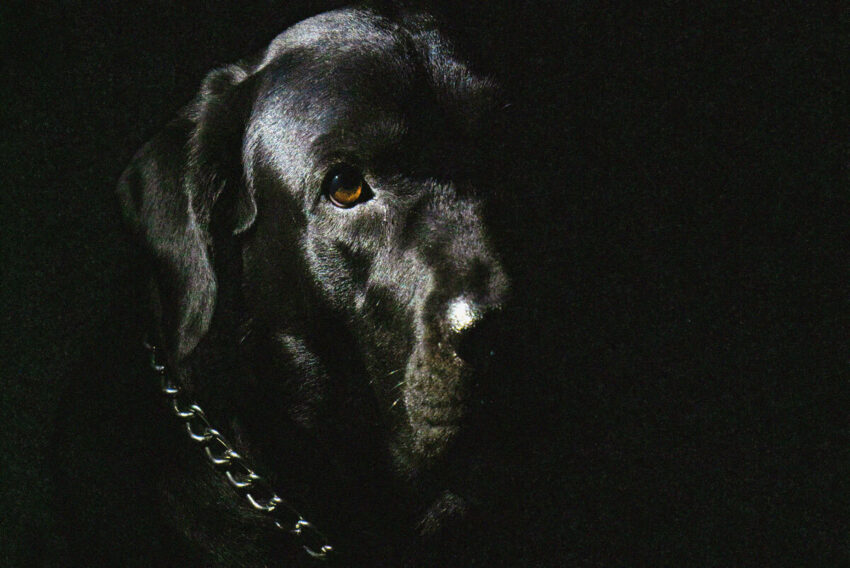
when stormy was thirteen or fourteen Pam and Dad brought home a puppy, a lab mix we called Thumper because of the way his tail bumped into everything. By that time Stormy was nearly blind and deaf and her teeth were tartar-stained nubs. You had to tap her to wake her for meals, and sometimes she stood up creakily and stared into the forest for minutes at a time, only to lie down again and curl her tail over her nose. I assume Thumper was meant to ease the transition, but he was hit by a car just days before Stormy’s kidneys failed. It was my stepmother who found him, so my sister and I never saw the body, and they put Stormy down while we were at school, so she too disappeared without any warning. (We hadn’t been allowed to see my mother in the hospital, so there was precedent, I guess.) In a bizarre turn of events my father offered to stuff her. I found the idea repellent: a corpse in the living room disintegrating under wet coats and dusty afghans—gross. Grief’s selfish that way. It never occurred to me that Stormy might’ve represented the same continuity to my father that she did to his children. All that death, all those failed relationships and abortive attempts to put down roots, and only Stormy never forsook him. Well, Stormy and Dalene and me, but he had to have known that was going to change.
we didn’t see Thumper die, but we could imagine it. Cottontail Drive was regraded in 1978 or ’79, a year or so after we moved to the country; before that, Dalene and I had to walk to 82nd Street to catch the bus. Stormy would come with us, and we were often joined by a neighbor’s German shepherd. Stormy never picked up the habit of chasing cars but the shepherd couldn’t help itself, and one day it jumped out at a Ford Bronco that mowed it down just as the bus was pulling up. The Bronco was a quarter mile up the road but we could hear the dog thump off the bottom of the chassis—once, and then again, and then again—but even before the third impact the movements of the long dark supple body had become nothing more than the lumpy undulations of a feed sack tossed on a pile. Miss Lottie wasn’t the type to brook any delays on her bus route or maybe she was just trying to spare us, and we were the kind of kids for whom adult authority was a greater goad than pity, so instead of running to the shepherd we went to school. I don’t remember the shepherd’s name or the name of the driver of the Bronco, but I’ll never forget the sound of those thumps, or the roar of the truck’s engine as the driver accelerated into the dog’s body.
i remember stormy as larger than the current incarnation of malamutes, but that could just be a function of age, the perspective of a tiny child who pummeled and pulled and clambered over an unmovable mountain of fur. In the spring we raked pillows of fluff from her shedding body till she’d shrunk to half her size, but the lack of cushion only made the muscle and bone beneath more palpable. She didn’t fetch or wrestle, sit or speak or stay on command, wouldn’t even pull a sled because she always turned around to play with whoever was riding on it, was absolutely useless as a guard dog. When a strange car pulled up, her half-hearted barks were requests for attention, not warnings: you had only to acknowledge her and she’d fall on her back for a belly rub. She was simply there, always, indestructible and unflappable, as constant as mothers and fathers were said to be but failed at miserably. When I was four or five I sprayed Raid on the tips of her ears because flies had bitten them bloody. I thought it would help but the hair never grew back, leaving her that much more vulnerable. But that’s the great thing about a dog’s love: they don’t have to forgive your failures because they don’t hold them against you in the first place.
the two or three days between Stormy’s death and the arrival of Bear and Trapper were the only time we were dogless during my childhood. Although that’s not quite true, because our clearing had already come to be haunted by a gray German shepherd who appeared from nowhere. She was leaner than Stormy, shorter-haired, carried her tail down rather than up, but even so, she couldn’t have looked more like the ur-dog of my consciousness if she’d tried. Pam shot at her with rock salt (the crystals supposedly dissolved inside the dog’s flesh, assuming you didn’t blind it) but I fed her on the sly. I had to. Stormy’d had her puppies when I was too young to remember and I didn’t recognize the shepherd’s swollen belly for what it was. My parents did, but they let me keep her anyway, on the condition that I get her spayed. My father found me a job mowing Mrs. Funderberk’s lawn for five or six dollars a week. At least four went to video games, so it probably won’t surprise you to learn that Marsha had two more litters before I saved up the money for the operation.
(how my little sister erin named my dog is one of those mysteries lost to family history, but yes, she was named after the eldest Brady sister, even if we spelled her name wrong.)
dalene and I both remember Stormy having three litters as well. Something about my father saying she was caught the first two times? But the third time he bred her with another malamute because he wanted puppies to give to friends and family? I don’t remember puppies before Marsha but I also don’t remember what my mother looked like, and the puppies and my mother would have shared the house, so…
The story was that she couldn’t suckle. I remember my father saying her teats were underdeveloped but Dalene says the puppies had trouble latching, and their distress caused Stormy to panic and kill three (?) of the offspring from her final litter, so the rest had to be taken away and…bottle-fed? It’s almost impossible to imagine my father condescending to such a maternal act, but it’s even harder to imagine my mother doing anything. In any case the survivors were all around. Aunt Peggy and Uncle Jack, our next-door neighbors in Bay Shore, had one, as did Aunt Janice and Uncle Jimmy, who lived down the street, and Aunt Diane and Uncle Nick (who really were our aunt and uncle) (well, sort of ) had OJ farther out on the island. I remember all of Stormy’s progeny as bad-tempered, aloof and sometimes aggressive with people who weren’t part of their immediate family. I suppose I’d be a bit traumatized too, if my mother had tried to kill me.
bear was a golden retriever, the largest the breeder’d ever seen—people mistook him for a brawny Irish setter. The breeder “threw in” Trapper, though I imagine my soft-hearted father was an easy mark. Trapper was a seven-year-old German shorthaired pointer who’d lived his whole life in a kennel. When my father brought him home he was so traumatized he wouldn’t move, and my father had to carry him into the house. He darted into the narrow space between the coffee table and couch and wouldn’t come out. Just crawled back and forth on his belly while we played with the new puppy. He had a scar on top of his head, a small white divot in coarse chocolate-brown fur. Probably from another dog, but I always suspected the breeder. There was something joyless about the way he spoke about his animals, as if he were a car dealer rating the relative merits of the 1981s over last year’s models: Trapper was a lemon, and my father was a sucker to have taken him. My father had to force Trapper out of the house that night, and none of us was able to get near him for a year.
what tolstoy says about happy families is true of dogs too. Bear was utterly unremarkable in his affability, and utterly wonderful. He was there to love, to play, to protect, and if we took him for granted he was OK with that, because giving us the freedom to be oblivious to the world—even to him—was the purpose of his vigilance. He was alpha through and through, and none of the other dogs challenged his authority—not more than once anyway. Although there was that one time the Hirschorns’ Saint Bernard found its way into our clearing. Bear ran up to it with his usual swagger till he got close enough to see just how big the interloper was. The Saint Bernard looked down at Bear with contemptuous bloodshot eyes as Bear edged closer with an air of Please don’t make me do this, please don’t make me do this, please don’t make me do this. But he would if he had to, because getting his ass kicked came with the job of keeping us safe.
marsha had a scar on top of her head, just like Trapper. I had no way of knowing where it came from, but I blamed whoever’d dumped her in the country because they didn’t want to be saddled with puppies, which suggests a particularly base character—a real man deals with his problems. But it was more than that. Marsha understood human violence. If I picked up a stick or even a fly swatter she wouldn’t come near me, and if she saw a gun she disappeared. You couldn’t help but understand how she’d learned those lessons when you saw the fear in her eyes. Fear and guilt, as when she chased a car in front of me. If she was close by when a car approached I had only to put a hand on her back and she’d remain beside me, though I could feel the eagerness quivering in her body. But if she was far enough away she ignored my yelled “No!” and bolted into the road and I would close my eyes and wait for the squeal, the thump, the growl of a maliciously accelerating engine. As soon as the car escaped she returned without being called, groveling so deeply her belly dragged in the dirt. All I had to do was lay a single heavy finger on her head, right next to that scar, and she would sink into the ground as if she wished it would swallow her, and I could never tell if she was asking me to hit her or not to hit her. But I knew she’d love me either way.
Oh, we’re terrible creatures, human beings. Don’t believe anyone who tells you any different.
but that first sight of her! Slinking along the edge of the clearing, that half crouch canids use when they’re stealing up or stealing away, head low, tail down, mincing steps eating up the ground like quail disappearing into tall grass. Words like “joy” and “exhilaration” lick at the edges of the feeling that came over me, the same way the word “faith” is a bourgeois deflection for the ecstasy of religious succor I was always told could be mine if I just believed hard enough. I could never convince myself to believe in god—I never got past the devil—but I believed that the Stormy-shaped ghost slipping behind the burn barrel was proof that the universe had levels of reality that extended beyond the merely material, that neither dogs nor mothers disappeared from your life but persisted as watchful benevolences I could no more ignore than I could a direct order from my father. He must have understood that too, which is why, in the first place, he let Marsha live, and why he didn’t ask me to help him with Marsha’s puppies when the time came. He knew I’d’ve picked up the baseball bat he’d given me when I was five or the .22 I got for my ninth birthday and followed him into the forest, and despite everything he said out loud, the last thing he wanted was for me to turn out like him.
(my father’s guns were two 12-gauges and a .30-06—his marine rifle—which is why he used my .22 with the puppies. A shotgun would’ve blown a puppy to bits and the .30-06 would’ve been like using a broadsword to carve a pat of butter: the .22 would take care of things just fine, and the fact that it was mine drove home the lesson that I should’ve handled my business. A few years later, when my relationship with my stepmother had reached its nadir, she tried to shoot Marsha with the same gun. The list of Marsha’s transgressions was as long as the rifle’s barrel but on this occasion Pam was just trying to punish me, and I had to wrestle the loaded weapon from her, and then, you know, that eternal moment my soul hung in the balance after I’d taken it. Among the many reasons the whole scene was stupid: a .22 would’ve never killed a seventy- or eighty-pound dog, unless maybe you got it through the eye. My stepmother wasn’t that good of a shot.)
for an entire year, as Bear grew into his strength and beauty and Marsha whelped and we gave away six of her seven puppies (and she went in heat again, and whelped again, seven more puppies and we were fresh out of friends to take them off our hands), Trapper skulked around the edges of our clearing, not unhappy or afraid, just anxious, untrusting. Oh, but needy too: if he wouldn’t let you touch him, he wouldn’t let you out of his sight either. Marsha watched people to make sure they weren’t going to hurt her but Trapper was just waiting for an invitation he could accept. All we had to do was find the right way to ask. One day when he was sleeping in the front yard I was able to steal up and put an arm around him. A vicious dog would’ve bitten but Trapper just tensed up. And then he melted. If he’d been standing he would have fallen. Whatever’d been holding up his defensive carapace for the past year simply collapsed, and after that you couldn’t leave the house without tripping over him as he came in for all the loving he’d been denied for so long. Most dogs claim your affection as privilege or payment for their own, but with Trapper it was pure gratitude, and he never tired of showing it. Love’s only recompense is love.
over the course of the same year Marsha killed every skunk for miles around. Five, six, seven, it seemed like there was a new corpse in the yard every week. She seemed unbothered by the smell, would run to kiss me as I walked up the driveway from the bus, couldn’t understand why I screamed and pushed her away. My parents made me bury the skunks in the forest. If you’ve never been two feet away from a skunk whose musk sac has been ruptured by a German shepherd’s death shake, you can’t imagine how disgusting it is. I carried the corpses at the end of a shovel, walked backward so the odor drifted away from me, but even so I was retching with every step. Six, seven, eight times I walked retching into the forest, which swallowed the skunks’ bodies so completely that I was never able to find any of the graves again.
one of the two surviving pups from Marsha’s second litter had a coat like a yellow lab and was probably Bear’s; Erin, who named all of Marsha’s puppies we didn’t give away or kill, called her Goldie. I was walking down the driveway to get the mail when a car sped by on Cottontail and she took off. I was too far down the driveway to see but I heard: the thump, the yelp, and then Goldie was running up to me whining and abashed, her whole body quivering as though she’d bitten an electric fence. I patted her head and tried to calm her so I could look for injuries when she spun around and lay down and shuddered like a backfiring mower. Her death had the quality of a cinematic dissolve: one moment there was a living creature at my feet and then some palpable but unmeasurable interval elapsed—a lifetime—and there was something else. I’d seen any number of dead animals before but I’d never seen one become dead, and I understood then that life is something more than blood and bone, synapses and kinesis. Goldie’s corpse was less than what she’d been alive. I could’ve believed it was a different dog entirely if the embarrassed expression hadn’t still been on her face, as if she were ashamed of letting me down. Maybe that’s why I don’t remember burying her: whatever was going into the ground wasn’t Goldie. At any rate the forest swallowed her like it had swallowed the skunks; like it had swallowed the twenty-five chickens Marsha killed in a single night the year before and like it would swallow thirteen of her offspring a year later, disappearing not just their flesh but the litany of failures that had condemned it.
not thirteen. Twelve.
a few months after we moved to the country one of the half dozen cottonwoods that shaded our clearing fell over. A whole tree. Five, maybe six feet in diameter. It grew at an angle but even so: it’d endured for decades only to give up the ghost right after we moved in, and you can understand why an impressionable eleven-year-old might’ve thought it was trying to get away from us. My father spent years cutting up that tree, and a section of trunk as big as his trencher lingered along the edge of the back yard for so long that I forgot about it beneath the tangles of poison ivy and hemp and an annual creeper that grew as fast as kudzu but looked more like cucumber or squash vine. I was getting firewood one day when I saw Bashful jump into this pile of foliage and disappear. It was only when I poked around that I rediscovered the section of trunk and saw the large dark whorl where a branch had been cut off. The whorl opened into the trunk, which was apparently hollow, and turned out to be Bashful’s lair. The other dogs all lived under the trailer but Bashful had an independent streak. The one pup we’d kept from Marsha’s first litter, she looked like a halfsize version of her mother, but where Marsha was wolf Bashful was coyote: sly, mischievous, irrepressible. (Not shy though: I guess Erin had been in a Snow White phase.) I don’t know if this is what led my father to spare her the following year or if, unlike the other puppies, she simply refused to follow him to her death. Not that it saved her: a year or two after all but one of her siblings had been killed, our neighbor to the north complained that she and Curvy had attacked his chickens, which he let roam free, the idiot. The neighbor wanted the dogs dead and my parents didn’t dispute his verdict. My father delivered them to the neighbor’s house himself, but I don’t know which dog was shot first, or who pulled the trigger.
it wasn’t the first trouble we’d had with neighbors. Not long after Marsha arrived Mrs. Looney said something had pulled the legs off her rabbits through the mesh of their hutches. Not one of them but all of them, Mrs. Looney said, six, twelve, twenty limbless torsos left behind like the remnants of a bacchanal, as if the goal wasn’t meat but murder, the ecstasy of extermination. Mrs. Looney wasn’t sure if it was a dog or a coyote, but I knew. The skunks had been a harbinger: Marsha loved to kill. No: Marsha loved to kill like people love to kill. For no reason. For the fun of it. There were always corpses in the yard. Squirrels, birds. Our cats. We always had one cat—I suppose we got them to control vermin. Certainly we never treated them like house pets, and for their part they ignored us. Pam poked out a square of screen in the back door so they could do their business outside. Three months, six months, a year, it was always the same story: one day we’d go out and find the cat dead, and I would bury it in the forest. Of course we suspected the dogs, but most of them showed no interest in the cats, and even Marsha looked on with disdain if one appeared when people were around. I’d’ve known if she wanted to kill them, I told myself, I’d’ve seen the quivering, the twitching tail, I’d have felt it in my fingers no matter how far away she was. But she was playing us all, people and cats alike. I was lying in the hammock on the back porch when that year’s cat came out and hopped onto the grass and began walking toward the forest. Marsha’d emerged from beneath the trailer earlier, was waiting in the shadow of the wellhouse in case I decided to go for a walk. Her ears perked up as soon as the cat jumped to the yard, but otherwise she didn’t move. I knew that stillness though, the effort it took to hold it. Don’t do it, I said to myself, don’t be that dog. But I knew she was that dog and that’s why I loved her: she was that dog so I didn’t have to be that boy. The cat was halfway between the safety of the house and the trees when Marsha lunged. I yelled and she balked but kept running. The hesitation saved the cat’s life. Marsha’s teeth closed over empty air but she still managed to butt the cat with her mouth, sending it sprawling. She was running so fast, though, that she couldn’t turn before the cat made it to the safety of the trees, and for the rest of its life it always left the house via the trailer’s roof, climbing up the porch railing onto the asphalt shingles and making its way across a network of branches into the forest. All that just to pee or poop. I admired the cat for surviving but I couldn’t tell you its name if my life depended on it. I’m not even sure it had one.
(i tried to go in myself. Bashful’s trunk. The hollow couldn’t have been much bigger than the drum of a washing machine or the tree would’ve broken rather than fallen from the root, but in my imagination it took on more generous—progenitive—dimensions: the cab of Pam’s ’72 Mustang, the back of my father’s van, the hollow hemlock Sam makes his home in in My Side of the Mountain, Nicodemus and Justin’s murine metropolis beneath the rosebush in Mrs. Frisby and the Rats of NIMH, the timbered continent of The Word for World Is Forest. I didn’t just want to live in there like Bashful, I mean. I wanted there to be somewhere else. Not long after he sent Bashful to her death my father finished cutting the trunk up into firewood.)
from skunks to cats to pigs. Marsha used to sit on the lawn and stare at the sty at the edge of the forest, quivering like she did when a car drove by until she couldn’t take it any more and started barking and raced toward them. The pigs tore off through a foot of offal, grunting and squealing, but their sty was circular and their flight inevitably brought them back to Marsha, who’d lunge and bark and send them on another round, and you’d swear she was smiling each time they came galloping back. Damn dog’s running the meat off my hogs, my father said, but I didn’t understand till the day he loaded his shotgun and walked onto the front porch. This was three or four years before I wrestled the .22 from Pam, but no amount of extra inches or pounds could’ve made me step to my father, and I could only watch as helplessly as I’d watched him put the same shotgun in my second stepmother’s mouth when I was six years old. Marsha was far enough away that she didn’t hear him come outside, which was probably for the best: if she’d turned around she might have taken the pellet in the eye. It was just one that hit her, maybe two: my father’d loaded the gun with birdshot and deliberately aimed wide, and as Marsha yowled and ran toward the house he looked at me with exasperation, as if his plan should have been self-evident to anyone with a lick of sense.
A whole forest behind her, and she ran toward us, disappeared beneath the trailer. There was an order to things, and she knew it. The very next day she was begging for scraps from my father’s hand, and she never messed with the pigs again.
(i suppose it could have been the other shotgun he put in my stepmother’s mouth, but I think that one was double-barreled and I doubt it would’ve fit. My former stepmother reminded me of the incident during a trip to Long Island when I was thirteen or fifteen—I have absolutely no memory of it—and my father was furious when I asked him about it years later. He hadn’t put the gun in her mouth, he protested: he’d put it in his. But they both agreed that he’d made me and Dalene watch.)
there’s a reason people call chickens dumb clucks: they’re even stupider than turkeys. The coop was made of galvanized steel and it got so hot in the summer that two or three birds died before we started propping the door open for ventilation. We hung a loose net of chicken wire in the doorway to keep the birds in and the skunks out, but there were no more skunks and we should’ve focused on what’d killed them. My door whooshed open one morning and my father snarled that my dog had killed his chickens and now he was going to kill her. I pulled the curtain back and saw Marsha slinking up and down the run, littered with white mounds that in my memory look like plastic shopping bags stuffed with trash, though this was when stores were still just using paper. She’d pushed her way past the loose chicken wire and gotten trapped and killed every last bird, maybe twenty-five in all. I cried and begged and to this day I have no idea why my father relented. Instead of shooting her he used a length of wire to tie a dead chicken to her neck. I guess it was a country thing: the rotting corpse was supposed to instill an aversion into the dog, but Bear and Trapper didn’t understand the plan and ate the chicken off her that evening. When I buried the rest of the dead birds I didn’t see a spot of blood on any of them; like the skunks, like the cats, like the rabbits, she’d killed them just to kill them. Like the skunks, like the cats, like Goldie, the forest swallowed our transgressions and derelictions, let us pretend innocence of the past.
at one point we had sixteen dogs living under the house. Bear, Trapper, Marsha, and thirteen puppies, plus Bashful in her lair. We must’ve gone through a fifty-pound bag of kibble every week but I don’t remember any fights over food. Maybe that’s why I didn’t get it. Everything was so peaceful. This state of affairs was so utterly foreign to every other aspect of my life that I took it as a sign that we were meant to have this many dogs. People we knew rarely had more than one, which served as a family mascot. That’d been us with Stormy, but fate had picked us out for something different. Marsha’s appearance—Stormy’s ghost!—and the breeder’s insistence we take Trapper, and my parents’ determination that I assume responsibility for getting my dog spayed, even if we ended up with the muttly version of 101 Dalmatians eating us out of house and home. Everything else in my life, from my violent alcoholic father to our shit-brown trailer sagging on cinderblock pylons to the outdated hand-me-downs I wore to school because my parents couldn’t afford to buy me new clothes, was a substandard version of something other people already had. That they were crappy was bad enough, but what really bothered me was that even the condition they aspired to was familiar, quotidian, banal. But our silver and gold and black and white and brown menagerie was unique to us. Not a horde but a pack. Organized. Purposeful. Bear was the alpha male, Marsha the alpha female, and although my father was the undisputed lord and master of his domain, I was their human. When I went for a walk they all came with me—all of them, all seventeen!—swarming around me like so many protons and electrons orbiting their nucleus. I never felt more powerful in my life, not before, not since.
Our Summer Issue
another family legend. Call it “The Treasure of Cottontail Drive.” Supposedly my father’d walked the property line with a friend right after he bought our land, and the friend (or maybe the friend’s wife?) had lost their wedding ring. I think it was our neighbor when we lived on 9th Street for a few months in the summer and fall of 1977. My father said whoever found the ring could keep it because insurance had already paid to replace it, and though I never actually looked for it, any time something glinted in the sun I ran toward it, and for the few seconds before my toe turned up a beer bottle or rust-flecked can my mind would fill with everything I was going to buy, like the shopping sessions they used to have after each round of Wheel of Fortune: I’ll take the BMX bike for $125, Pat, and a father who doesn’t terrorize the people he loves for $50. The pieces of litter had their own value, though, not as relics but landmarks, touchstones. A deciduous forest is a sea of browns and greens you map by the tiniest of irregularities and idiosyncrasies. Ours was composed of regimentally ordered catalpas save for the few cottonwoods that had horned in here or there, so a faded Silver Bullet or label-less bottle of Miller High Life could define an area of thousands of square feet. I spent hours in that forest every day, knew it like the back of my hand. I knew where the one maple tree grew (not on our property but just over the southern border on our neighbor’s), the single tiny elm that grew next to the driveway near the entrance to the shop, the stunted cedar that grew about thirty or forty feet west of the burn barrel, which I liked to think of as a discarded Christmas tree that’d decided not to die on January 2nd. My parents might’ve known that the land west of ours was used as a Boy Scout campground (I found their abandoned firepits and imagined bandits, runaways), but they didn’t know about the tiny streambed that ran there, no more than three or four feet wide, and that filled up with water only every two or three years. I named at least a dozen trees, taught myself to build a lean-to in anticipation of my own flight, found someone’s drying cache of K Weed (it turned out to be my father’s helper’s) and destroyed it, knew where the mulberries bore tart fruit each year and where the grapevines were so thick you could swing on them like Tarzan. I knew where everything in that forest was, except where our neighbor or his wife lost their wedding ring and where I buried all those skunks and cats and chickens and Goldie, and where my father killed Marsha’s puppies. Five acres: roughly the size of a New York City block, and one of them was our clearing. And I lived there for seven years. I covered every inch of that territory dozens, hundreds of times. It makes no sense that I never ran across the graves. Hell, it makes no sense that in burying one body I didn’t sometimes dig up another. And the puppies’ grave must’ve been huge. Thirteen of them: seven who were just a few months old, six more who’d reached full growth. The graves for the skunks and cats were just holes in the ground like you’d dig for a rosebush or apple seedling, but the puppies’ grave must’ve looked like a grave: dark bare earth mounded over putrefying flesh and imperceptibly sinking down like an air mattress with a pinhole leak. It couldn’t have been too deep either, so you’d think that if nothing else I’d’ve smelled it, but though I didn’t look for it any more than I looked for the lost ring, the glimpse of a dark patch of earth amid the carpet of poison ivy and hemp that grew beneath the catalpas would churn up a blackness in me in the same way the glimmer of sunlight off what inevitably turned out to be a bleached crow’s skull or the casing from the shell that’d killed it could stir up a fantasy of a trip to Bloskey’s, all the Izod and Polo my heart desired, or maybe just a bus ticket out of town. If the phantom ring was escape the phantom graves were its opposite, not captivity as much as the impossibility of flight. Of movement. Not death per se, but nothingness, the negation of the lifeline the universe had thrown me in the form of a ghostly gray body slinking through the twilight right after Stormy died. But when I got closer to the dark patches they always turned out to be what they’d looked like: dark patches of earth, unsullied by shovel marks or footprints, human or canine. The thin line between denial and hope: Is it a noose or just a leash? Each time another dark patch turned out to be solid earth and not a grave, I mean, I would find myself imagining that Marsha’s puppies had escaped their fate, in the same way I used to imagine that my mother hadn’t really drowned in her own blood after an embolism detached itself from the bruise on her thigh and lodged in her lungs, but had simply fled for her safety and would come back for us when the coast was clear. And then I’d catch sight of Curvy.
the way my father looked at him sometimes. After, I mean. There are combinations of emotions whose physical manifestations cancel each other out, so that the conflicted person almost looks like they’re not feeling anything.
Almost.
in my memory I see him emerging from the forest with a fifteen-pound pipe wrench in his hands. He walks slowly, like he’s just getting back on his feet after a long convalescence. Not limping or reeling, not even careful. Just slow, as if his body weighed more than he remembered it weighing the last time he noticed that he too was a soul housed in flesh and bone, just like the dogs he’d buried in the forest behind him.
When only Marsha, Bear, and Trapper greeted me as I walked up the driveway, I knew something was up. On some level I must have known, though it didn’t become a conscious thought until I saw my father come out of the forest with the pipe wrench. Did he choose it over an axe or sledgehammer or baseball bat so he’d be reminded of what he’d done every day he went to work to provide for his family, or was he just being practical, as with the choice of my .22 over a more powerful gun? An axe would splatter, a sledgehammer’s unwieldy, coating my bat in clumps of blood and fur would mean admitting that I’d never been going to use it in the first place. Murder, hot-blooded or cold, is a sentimental sport, but a cull demands efficiency.
At some point I clocked the presence of Ron Hunt, a family friend. I don’t remember if I knew that they’d used my gun, though, until Curvy came back. In my memory I see him walking out of the forest with a haunted expression in his eyes, but I don’t know if it was that day or some other—like a lot of black dogs he always looked a bit haunted. I remember he was dirty though—smeary—and his tail hung flat against the back of his legs in a weird way, but what I mostly remember is the hole in his snout. The dark bead of blood was no bigger than a pencil eraser, but even so, you could tell it was a hole in his snout, which is how I knew they’d used my .22. He went straight for the burrows beneath the trailer just like Marsha did after the pigs, lived there with Bear and Marsha and Trapper until our neighbor complained about his chickens. You might think he’d’ve been leery of my father or guns or, I don’t know, anything that moved, but aside from the tiny scar in his snout and the kink in his tail—I assume my father or Ron Hunt broke it when they grabbed him as he tried to escape and yanked him back—he seemed unaffected by having had to dig himself out of a grave with twelve of his brothers and sisters. Erin thought the kink in his tail was cute and called him Curvy. If ever a dog was failed by a family, a species, the generational violence of eugenic interventions quaintly known as breeding, it was him.
seven or eight skunks.
Three or four cats.
Twenty or twenty-five chickens.
Twelve puppies, plus Goldie, and probably Thumper too.
And one dead mother.
I never found any of their graves.
our catalpas grew in rows like trees in an orchard. Someone said they’d been planted to be harvested as fence posts and someone else, even more improbably, said they were to have been used in the making of pickle barrels. But I was pretty sure the trees had been planted not for any practical purpose, but simply to scale the horizon. “Day after day they traveled in Kansas, and saw nothing but the rippling grass and the enormous sky,” Laura Ingalls Wilder wrote in Little House on the Prairie. “In a perfect circle the sky curved down to the level land, and the wagon was in the circle’s exact middle. All day long Pet and Patty went forward, trotting and walking and trotting again, but they couldn’t get out of the middle of that circle.” As it happened I knew that Kansas too, from the two years we spent in the sparsely populated western part of the state before we moved to Hutch. I knew how oppressive an unbounded vista could feel, although it would be years before I understood that the feeling stemmed not from a sense of one’s smallness but, rather, from the world’s vastness. On Long Island the suburban grid netted the ground beneath your feet, held it down, contained it, and the buildings and trees limited the view to a few dozen or hundred feet. Even when you looked at the ocean it was with the land at your back—the marina, the ubiquitous seafood shack, or just the parking lot anchoring you to a tamed, metered terrene. The emptiness of western Kansas revealed these constructions to be no more substantial than the occasional beer bottle in our forest, no more tangible than that lost wedding ring, props in a puppet show in which we pretend that the natural world is nothing more than a backdrop to human endeavor. That we do and aren’t done to. The man-made forest surrounding our trailer allowed me to ease back into the blinkered existence necessary for any activity above the level of the merely animal. My eleven-, twelve-, thirteen-year-old self treated it as a natural phenomenon like the empty prairie in western Kansas, when in fact it was as manufactured as the fences and barrels it never became, a garden in all but name. Not nature but “nature,” an idea of the world rather than the world. Yet the forest knew what I was doing better than I did. Knew that my feet would follow the paths they’d worn for themselves, that a landmark is only a landmark if you return to it again and again, which means avoiding unexplored areas. Hic sunt dracones et canes. What I’m trying to say is that I didn’t find the graves not because I didn’t look for them, but because I must have known where they were and avoided them. But I’m also trying not to say that because, in the first place, it reduces the mental effort of years of compartmentalization and repression to a few sidesteps and averted glances, but also because it sounds like something that could retroactively be called self-care, when complicity feels like a better term. Because if I found the puppies’ graves I would have had to work that much harder to pretend I didn’t know what else my father had killed.
but how many times he spared Marsha’s life when he’d’ve killed another dog without a second thought! And he did it for me. His love bore not just the power of, but the responsibility for, life and death, and I betrayed it by blowing my quarters on Asteroids and Pac-Man and Galaga and Joust. (Joust for god’s sake: one of the most incomprehensible games of the 1980s.) And I mean, I’m not stupid: under the best of circumstances it would’ve taken me months to save the money, during which time Marsha would’ve gone into heat at least once, and the prudent course of action would’ve been for my parents to get her spayed and have me pay them back. But my father was willing to risk it to teach me the most important lesson about animal husbandry. Dosed needle or speeding car, pipe wrench or bullet or bat. You can parse the methods for degrees of cruelty or succor, barbarity or necessity, but none of it mitigates the fundamental fact that a pet dog exists entirely on sufferance. It lives only as long as someone lets it live, and it dies when someone decides it dies. My father didn’t condemn Marsha’s puppies to death, in other words: I did, as soon as I made their lives inevitable. The fact that he carried out the sentence was perhaps the greatest kindness he ever did me, and I never forgave him for it.
in june of 1997 I had a conversation with a woman my father knew who was heartbroken because her beloved Pomeranian had been run over by a car. She must have talked for twenty minutes about her love for the dog and how raw and terrible she felt; she broke into tears several times and I did my best to console her. At some point, though, the writer’s instinct, or the snoop’s, kicked in, and I asked when the accident had happened. A year and a half ago, she said. From what I knew of the woman’s life, she had a wonderful marriage, a passel of overachieving children, and a beautiful home, and so, yeah, this particular accident, however awful, didn’t strike me as the kind of thing that would derail her life. I muttered a few platitudes and hung up; but a few years later, when I was working on a book about the time my father spent on his uncle’s dairy farm, I mentioned this story to him. I was home for Christmas, we were at my stepmother’s parents’ house out in Utica, my father wandered into the basement rec room where I was (not) sleeping, it seemed like the natural time to reminisce. Like a lot of people with secrets, my father liked spilling others’, and in the intimate hush particular to half-lit sleeping houses, he told me that the woman had once killed a man. She’d been a teenager, so this was the late 1950s or early 1960s. Her boyfriend was teaching her how to drive. They’d sneak out in the middle of the night, he said, would practice on the empty streets, and one night she hit someone. As my father told it the man was a vagrant of some kind—I think he used the word “hobo”—and I think his marginal status as well as the woman’s age played a role in the leniency she received. At any rate she wasn’t charged with a crime, and the incident remained a secret, suppressed, quite possibly forgotten—my father’s face and voice had taken on that oblique pitch a storyteller adopts when they’re staring into a room in their memory that they haven’t opened in years. But she hadn’t forgotten. There was nothing in our conversation to indicate that she was thinking of anything besides the dog that had died a year and a half before we spoke, but still, there’d been something missing, a catalyst that wasn’t revealed until my father told me about the death that had occurred all those years earlier. How long we bury our grief sometimes, how crooked the paths by which it makes its way to the surface. A year and a half isn’t a long time to mourn the man whose life you cut short, even if it was an accident. Even if you don’t know you’re mourning him. And didn’t I spend years telling myself—yes, and anyone who’d listen—that the injury that led to my mother’s death had been caused by a Saint Bernard that knocked her down? And here I am thirty years later, still railing against my father for killing a bunch of puppies and once again letting him off the hook for beating his wife to death. Somebody deserves better, but I’m not sure if it’s the people or the dogs.
postscript, 12/25/24: I called Erin to wish her Merry Christmas and during the course of our conversation ran a few of these anecdotes by her. She had only one correction, namely, that Marsha hadn’t died of heartworm but had in fact been hit by a car one morning when she was walking with Erin to the bus. She was old, ill, as blind as Stormy was at the end; as Erin said, the family was “just waiting.” Even so, my father felt the need to shield me from the brutality of her death, and when my mind filled with an image of my beautiful, fearless, maniacal familiar crushed beneath the wheels of a speeding Bronco, I couldn’t help but feel thankful that he’d done what he could to protect me, the bastard.
Editor’s Note: Several identifying details have been changed.