No one feels good at four in the morning.
—wisława szymborska, translated by magnus j. krynski
and robert a. maguire
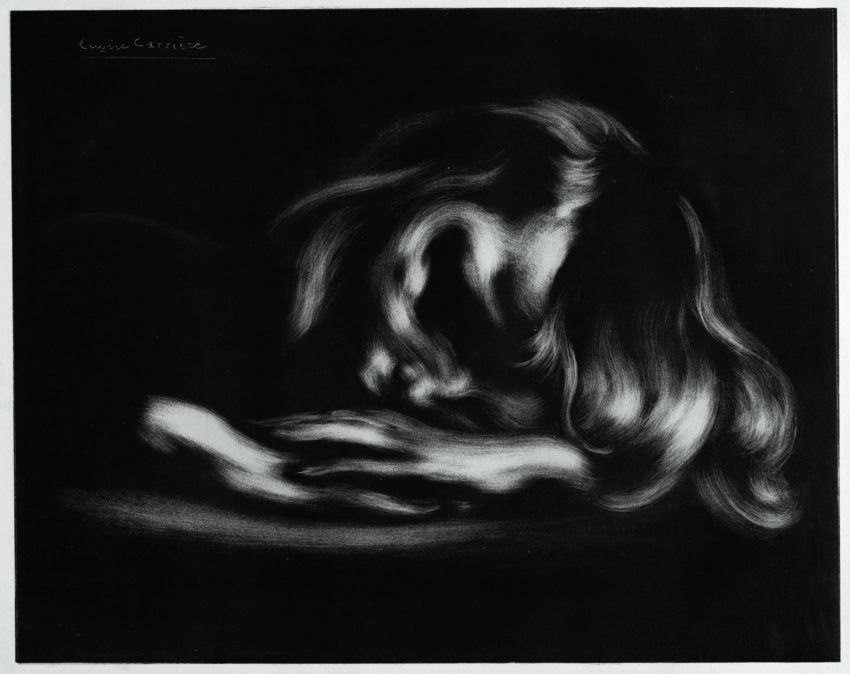
No one feels good at four in the morning.
—wisława szymborska, translated by magnus j. krynski
and robert a. maguire
I don’t remember when my insomnia started, or rather I don’t remember a time when it wasn’t there, as an active presence or a latent (I almost said dormant) threat. I remember, as a child, having hot milk in the dark—was it 4:00 a.m.? was it 5:00 a.m.?—with my father, an insomniac like me. I remember summers spent with my cousins, who slept until midday. I woke at dawn or before and spent several hours on my own, careful not to make any noise, eating cookies slowly and reading stacks of old comic books illuminated by my uncle’s tiny desk lamp. I’ve sometimes said these hours made me a reader, but the claim is probably spurious, a way to find an upside to it all. In truth, I think the lesson I learned from those summers was how to live with envy. As the sunlight changed from light purple to white and golden yellow, I’d feel boredom shift into loneliness, frustration shift into anger at the inability to sleep that separated me from everybody else. My aunt and uncle didn’t empathize so much as arrange things so I wouldn’t be a nuisance (hence the cookies, the comic books). They seemed disappointed. They didn’t understand why I couldn’t sleep like a normal kid. Neither did I.
I define periods of my life, from childhood on, based on the ebb and flow of my sleeplessness: 1998 was a bad year; 2012 was my worst so far; bad, too, were 2021, 2022, 2023. 2019 was OK. 2025 was OK until I started thinking deeply about this essay. I had been gathering notes for it, sleeping fairly well; then, on a plane to Poland, I wrote down the first sentence in my Notes app. The next day, I woke up at 4:00 a.m. in my hotel in Kraków. Insomnia, like a malicious djinn, is easily summoned.
insomnia can take different shapes. People who suffer from it often describe it in detailed, intimate terms, as they would the behavior of a pet. You anticipate its mood changing, you learn (or anyway convince yourself of ) specific tricks to cajole it into obedience. You accept that its worst qualities won’t change, because they are part of its nature.
Doctors call my kind of insomnia terminal, an ominous adjective I like, though it simply means that the end of my sleep is most affected. I go to bed at 11:00 p.m.; waking up at 5:00 a.m. counts as a good day. On other days, the bad ones, I wake at 4:00 a.m., or at 3:00 a.m., and I know that’s all the rest I will get. I seem to wake up most often at exactly 4:48 a.m., but I suspect I am simply more likely to remember that combination of numbers when I see it, because it’s the time the playwright Sarah Kane said she would experience a moment of lucid torment before plunging back into psychosis.
Doctors have also identified another form, initial insomnia, which affects your ability to fall asleep. When you do—if you do—you can theoretically sleep until the afternoon, something that has never, ever happened to me in my four decades of life, not even when I go to bed drunk after partying all night, not even with the help of sleeping pills so potent they are banned to prevent them from being used as a date-rape drug.
My insomnia had no cause but its effects were everywhere, which is one of Aristotle’s definitions of God.
Terminal insomniacs often view those who suffer from initial insomnia with envy. I consider the ability to sleep late as unattainably blissful, something so desirable it can happen only on TV: waking up slowly, stretching in bed, the sun high and warm and golden through the curtains…Initial is theoretically easier to medicate, since any pill I take before going to bed will have been metabolized by the time I need it to have an effect (thus I resort to pills banned in most Western countries). Terminal insomnia, however, allows you at least to get started with your day without spending hours tossing and turning in the prison of wakefulness, groping in the dark for the key. I can fall asleep by closing my eyes whenever and wherever I want, which to sufferers of initial insomnia is itself unattainably blissful. But I can fall asleep because I can’t stay asleep, and I’m always exhausted! Or so I tell the initial folks in my inner debate about who has it worse. But it only makes them more bitter. They are exhausted, too.
Whatever the case, insomnia is much easier to handle if you have the flexibility of a freelancer: my own is the reason I tried to avoid working in an office. Sleeplessness is incomparably harder to endure if you have children: my insomnia is one of the reasons I don’t. Again, like a pet—or a cursed immortal familiar—insomnia shapes the choices you make in life.
We tend to think of insomnia as a consequence of stressful days or intruding thoughts. But often there is nothing specific keeping you awake, no object of your vigilance, no issue you turn over in bed. Rather, any thoughts you have relate to your desire for sleep and your frustration at that desire being frustrated. Pure insomnia is tautological. It rips a hole in the fabric of your days and fills it with itself. After a while, being unable to sleep becomes the reason you can’t. This self-fulfilling aspect is something insomnia shares with depression and with writer’s block, both of which my insomnia has caused, as well as with psychoanalysis, which was unable to alleviate even one of the three.
If insomnia has no source, nothing can be done to overcome it. And so it falls out of the causal reasoning we use to make sense of the world. At the beginning of what would be my longest bout of poor sleep so far—2011 to 2015—I tried moving apartments; I tried avoiding screens after dinner; I tried exercising in the morning, or in the evening, or both; I tried a punishing Norwegian meditation regimen; I tried a sleep monitor, whose consistently poor readings undermined even those mornings when I woke up feeling mildly rested; I tried esoteric diets, and spent my mornings groggily jogging along Berlin’s Landwehrkanal, hallucinations of croissants before me. Nothing worked. My insomnia had no cause but its effects were everywhere, which is one of Aristotle’s definitions of God.
writing is the way I try to understand my life, so I also tried writing about my sleeplessness. I told myself I could translate it into insight, but in retrospect the truth seems more mundane: I wrote about insomnia because there was little else I could have written about. At the peak of the worst period, I lacked the breadth of imagination and depth of focus that literary invention requires. My insomnia didn’t fill up only my nights; it laid claim on my days, too. Like the single thread that, once pulled, gradually unravels an intricate embroidery until nothing but blank fabric remains, lack of sleep leads to other losses: of energy, appetite, sexual desire; of concentration and its opposite, the ability of the unencumbered mind to freely wander. Even if you’re not actively thinking about sleep, your thoughts are disrupted by the dullness of sleep deprivation, which ultimately means you’re thinking about sleep again.
And so I ended up attempting to build a novel around it, as a sort of fail-safe—at least when I couldn’t think of anything else, I could think of that. I came up with a character, or a serviceable facsimile of one: a man who tries to sell insomnia as the ultimate self-optimization hack, a way to extend your life by reclaiming a portion of the time you otherwise wouldn’t experience. I spent five years on this exercise in wish fulfillment. I wrote hundreds of pages. Of course it wasn’t fulfilled.
It wasn’t a very good idea for a novel—fiction rings false when it is employed to convince yourself of something. And insomnia itself somehow resists narrative structure. In theory, it could be seen as an ideal premise for a plot—a person desperately wanting something. In this case, though, the protagonist’s quest is passive and boring. And it always fails, whereas stories happen when a cycle is broken by something unexpected. My favorite example comes from Edgar Allan Poe’s “The Cask of Amontillado”: “The thousand injuries of Fortunato I had borne as I best could, but when he ventured upon insult I vowed revenge.” Insomnia is the cycle, the thousand injuries. Every night you pray for the unexpected to happen, and it never does.
It’s no coincidence that most writing about sleeplessness (and about sleep, which is also cyclical) adopts a fragmented or episodic form: consider Marie Darrieussecq’s Sleepless, or Theresia Enzensberger’s Schlafen, or Haytham el-Wardany’s Book of Sleep. The writing an insomniac tends to produce is short and self-contained, because you can’t summon the concentration for anything longer. The sleep you manage is short and self-contained, too. Writing about insomnia ends up looking like insomnia itself, not an analysis of it but an illustration.
Ancient biographers claim that the Latin poet Lucretius was driven mad by a love potion and wrote his books, according to Saint Jerome, per intervalla insaniae. This means “in between bouts of madness,” but a childishly literal translation would read: “during the pauses of his madness.” Lucretius’ condition is presented as a single overarching presence in his life, which every now and then abated long enough for him to become himself again, an occasional clearing in a dark forest. I pause on these three Latin words because I often apply them to myself. (They appear, rather self-aggrandizingly, in my Instagram bio.) It takes a minor slip of concentration for insaniae to read as insomniae: I wrote my books “during the pauses of my sleeplessness.”
I don’t see myself as a Romantic poet scribbling in his moonlit garret, kept awake by his artistic endeavor.
This essay, too, was written per intervalla insomniae. I’ve worked on it in hotel rooms between 4:00 a.m. and 6:00 a.m., the city on the other side of my window—Kraków, Warsaw, Łódź—growing imperceptibly brighter with each sentence. Long hours of darkness invite magical thinking; you recast the dull waiting for morning as a way of summoning it, with sentences or cookies, just as you cement the connection between writing about insomnia and bringing it on yourself. And yet the stretch of night that comes after you’ve slept lacks the aura of the stretch before: 4:00 a.m. feels different depending which side of tomorrow you’re on. I don’t see myself as a Romantic poet scribbling in his moonlit garret, kept awake by his artistic endeavor; I see myself as an overworked middle manager optimizing for productivity whenever he can.
In the long run, the only solution to insomnia I’ve been able to find is accepting that I’m awake and defining whatever time it might be as “morning.” It is, in fact, no solution at all, simply acquiescence (quiescere, the word’s Latin root, means “to rest”). And yet, no matter how often your experience has proved otherwise, the dark before dawn always comes with the suggestion of slumber.
You’ve been up for an hour or two; you’ve chased a thought down a couple of paragraphs in a silent room. The intersection below is empty, the streetlights still blinking rhythmically. You are no longer as alert as you were. You lose the thread, you stop mid-sentence and close your eyes. There is a promise of a headache in the back of your skull, a sleep debt that by noon will coat your every thought, but there’s no pain yet, just desire for sleep, just tiredness. Your body feels soft, torpid. The laptop’s monitor glows dimly, casting its orange-red light on the crumpled bedsheets behind you. They, too, hold a promise. You have had decades to learn that it is a lie. Yet a part of you, in this dark and silent room, still yearns for the possibility that perhaps, if only you draw the curtains, close the laptop, let yourself be tempted by the starched hotel bedsheets on your skin, focus on your breath as the Norwegian teacher once taught you, and close your eyes for long enough, then maybe just this once…
Annie Ernaux's unpublished journals, Namwali Serpell on Toni Morrison's native figures, Lauren Oyler on her AI boyfriend, and more.
Annie Ernaux's unpublished journals, Namwali Serpell on Toni Morrison's native figures, Lauren Oyler on her AI boyfriend, and more.