It was not by reading Albert Camus that I first understood, through a writer’s eyes, what a foreigner was and how he felt; it was by reading Thomas Hardy. Jude the Obscure, his final masterpiece in prose, appeared in 1895. I read it in high school. It begins with Jude Fawley, eleven years old, an orphan, helping his teacher, Richard Phillotson, load his possessions onto a cart. The boy, a devoted pupil, doesn’t understand why his teacher is leaving the village of Marygreen. It’s to obtain a university degree, Phillotson explains, in a city called Christminster. After some parting words of advice, Jude is alone, abject, abandoned:
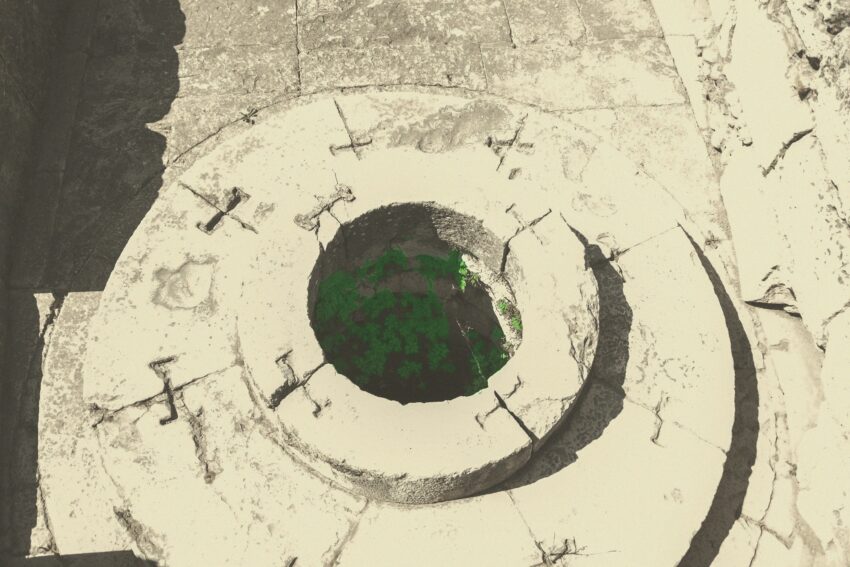
The cart creaked across the green, and disappeared round the corner by the rectory-house. The boy returned to the draw-well at the edge of the greensward, where he had left his buckets when he went to help his patron and teacher in the loading. There was a quiver in his lip now, and after opening the well-cover to begin lowering the bucket he paused and leant with his forehead and arms against the frame-work, his face wearing the fixity of a thoughtful child’s who has felt the pricks of life somewhat before his time.
Within the third sentence, then: the quiver of lip at the beginning, the fixity of face at the end. One gives way to the other. I felt the consecutive pricks of these words while rereading Jude the Obscure after a gap of many years. Quiver and fixity, I would like to suggest, are keys to understanding both Jude’s character and this novel as a whole, which is about a working-class boy who dreams of becoming a scholar. Jude, a hybrid of child and man, both innocent and aged, is himself a well-like receptacle; he contains extremes of sensibility and stoicism, antipodes of life and death. The gleaning of adult life is out of sync with his biological age; this uncanny clash lies at the root of his quivering. Unlike King Lear, aged and mad when he feels a pin prick his hand, young Jude is terribly lucid. The passage concludes:
The well into which he was looking was as ancient as the village itself, and from his present position appeared as a long circular perspective ending in a shining disk of quivering water at a distance of a hundred feet. There was a lining of green moss near the top, and nearer still the hart’s-tongue fern.
The well is described as a sort of telescope plumbing the earth’s depths instead of aiming upward toward the sky. At the bottom, Jude perceives a second source of quivering: the water itself, bouncing back daylight but also mirroring, in a separate act of quivering, the movement of his lip. We might think of the quivering liquid disk as an inverted replica of the sun, or a magnification of the light in Jude’s dampened eyes.
Looking down, Jude is seeing through time, to the end of his time, to death.
The well in question is, first and foremost, “ancient”—aligned, like Jude, with a distant temporal dimension. Though usually kept covered, it can be manually opened. Located at the edge of the greensward, it serves to draw fresh water from belowground. The “frame-work”—a fixed structure—allows Jude to lean his weight on it. It is rimmed with plant life—moss and fern—that thrives in shade. In English, the word well takes many forms and meanings: as a noun, it refers to a source of water in the ground; as an adjective, it’s used to indicate a positive state of things; as an interjection, it prefaces new trains of thought.
Jude’s well provides a place for rest, for private contemplation. A place where water, always quivering, invites one to be alone and still. I think of Narcissus, motionless when he first sees himself in water in book 3 of Ovid’s Metamorphoses. “He was stunned at himself, his expression fixed, / still as a statue shaped from Parian marble.” (This version is from a translation I’m working on with Yelena Baraz.) When Eve finds herself before a lake in book 4 of Paradise Lost, the word fixed also crops up: “There I had fixed / Mine eyes till now, and pined with vain desire.”
What is it about the wavering nature of water that fixes and transfixes us? Unlike Eve and Narcissus, deceptively doubled by water’s reflective properties, Jude observes only that quivering, distant disk. Though he doesn’t see himself, this is the first time the reader is allowed to see him. We can read Jude’s peering into the well as a form of visual katabasis: traveling with one’s eyes, and in one’s thoughts, to the underworld. Looking down, Jude is seeing through time, to the end of his time, to death. The knowledge he gains might be what the philosopher Giorgio Agamben calls, fittingly, oscura saggezza—obscure knowledge—linked to the vice of acedia. Acedia, literally meaning “a lack of care,” refers to a listless state. This condition was personified as the noonday demon in early Christian times. Agamben notes that the melancholic subject resisted a dialectic framework of illness versus wellness; rather, it thrived in an in-between, unstable state, an ambiguous relationship between desperation and desire that might be linked to Jude’s quivering malaise. My Italian ear picks up on giù, a near twin of his name, meaning “down” in Italian, from Late Latin iusum, in turn from deorsum, meaning “downward” in Classical Latin.
last year’s book fair in Turin gave me the occasion to return to Hardy’s novel. The writer Alessandro Piperno had invited me to talk with him about a literary work that had profoundly influenced me. Onstage, Piperno expressed his surprise at my choice; he’d assumed I’d have proposed an Italian title. It’s true: for more than a decade now, I have been speaking and writing predominantly about the Italian literary tradition. But I felt the need to look deeper, all the way down to the first novel that really shook me, that taught me melancholy and tragedy, that taught me the impact a novel might have. I was in school in Rhode Island; it would have been either eleventh or twelfth grade. In Jude’s character, I found buried aspects of myself I had hitherto been unable to acknowledge. Looking back at the novel, I told Piperno, was like peering down a well, down to my own foundations.
But why, really, am I drawn to this? Does it have something to do with a white wooden well in the village of Kingston, Rhode Island, where my earliest memories are located? The village’s original name was Little Rest. We lived in a white wooden house across from this well, which was built on a small grassy island where two roads crossed. There, South Road became North Road. There, one could travel either east to the bay or west to wooded landscapes. I saw this well when I stepped outside to wait for the bus that took me to school. Its four sides are covered with a green lattice and topped by a small peaked roof. It forms the background to photographs, to my earliest recollections. It has never been active in my lifetime; it only recalled a distant past. Yet it was the abandoned, unquestioned center of things.
jude was also on my mind during a visit this summer to Eleusis, twenty kilometers west of Athens, and the site of the famously mysterious rites handed down by Demeter. There, I saw a set of caves that, according to legend, led to Hades. At their mouths, sheaves of wheat—it grows wild all over the site—had been left to honor the goddess of seasons and crops. One of the most sacred elements of the site is the Kallichoron Well, beside which, according to the Homeric Hymn to Demeter, the goddess cried. In the hymn, here translated by Apostolos N. Athanassakis, Demeter is grieving the loss of her daughter Persephone, who has been abducted by Hades through a crack in the ground and has become his wife and queen of the dead. After nine days of fruitless searching, Demeter arrives at a well:
she reached the house of prudent Keleos,
who then was lord of Eleusis, a town rich in sacrifices.
Grieving in her dear heart, she sat near the road,
at Parthenion, the well from which the citizens drew water,
in the shade of a bushy olive tree which grew above it.
She looked like an old woman born a long time ago
and barred from childbearing.…
When the daughters of Keleos come to draw water, they don’t recognize the goddess. Demeter, in her bereavement, appears old. Her aspect has changed from that of a young mother to that of a woman already in menopause. Like Jude, she has catapulted—in a strictly illusory sense, given her immortality—to a time she has not yet naturally reached. The well forms part of the journey that will lead Demeter to Persephone, allowing for their temporary but ongoing reunion, and turning barren soil fertile again.
The young-old protagonist of Hardy’s novel, it struck me, seemed to be part Demeter, part Persephone: grieving and searching like the mother, connected to a chthonic dimension like the daughter. Pained states of separation pertain to both goddesses, and to Jude as well. Like Demeter, Jude grieves for Phillotson as if he were dead, when in fact he is merely absent. The bright torches that Demeter, darkly veiled, holds in her hands as she looks for her daughter are akin to the quivering disk in Hardy. When Demeter enters the house of Keleos and touches “the roof with her head,” I thought of Jude’s head resting against the frame of the well. Before too long Marygreen seemed a counterpart to Eleusis: an archaic landscape, a mix of darkness and light, partly aboveground, partly below, hovering between the living and the dead.
wells are themselves liminal: cavities descending into the ground with access from above. Their combination of inside and outside creates a border zone of abjection: abicere, in Latin, is a literal casting down. The root of abjection, the theorist Julia Kristeva writes, is the disturbance of identity resulting from a state in which death infects life. And so Demeter, at the well in Eleusis, looks like an old woman; and so eleven-year-old Jude, in Marygreen, perceives a glimmer of a much older self.
after noticing the quivering disk of water, Jude sees, or imagines, Phillotson—his beloved teacher, mentor, and father figure—at the same well, drawing the same water. His own looking merges with memories of the absent man’s looking. The boy thinks to himself: “I’ve seen him look down into it, when he was tired with his drawing, just as I do now, and when he rested a bit before carrying the buckets home!” Jude doesn’t literally see himself in the well; he sees a simulacrum of his teacher. And yet, using the language of simile, he likens himself to another, older man. This specter of Phillotson generates Jude’s double, but theirs is an unequal correspondence, one that will drive the tragic elements of the novel. For beloved Phillotson will become a rival to Jude, in due time.
By simple logic, if what is fixed cannot quiver, then what is quivering is not fixed. And yet Jude is both.
On the heels of this mirage, “a tear rolled from his eye into the depths of the well. The morning was a little foggy, and the boy’s breathing unfurled itself as a thicker fog upon the still and heavy air.” The morning is unclear. The life force within Jude—his breathing—contributes to the atmospheric gloom, and the word still, which describes the air, recalls the deathlike fixity of his face. The tear that falls is a liquid manifestation of emotions welling up within him, falling, as his gaze does, into water below. The obscuring fog in Jude the Obscure evokes the underworld; the Homeric Hymn to Demeter keeps referring to the thick fog of Tartarus, and when Persephone is abducted, she is “carried…crying loud down to misty darkness.”
as a verb, quiver means to make a type of rapid, subtle, uncontrollable movement, often in the face of overwhelming sadness or fear. Both quiver and quaver date to the fifteenth century in English; to quiver is to tremble, to shake, to shudder. As an adjective, quivering means “active, lively”—a term linked to vitality, to life, to the very start of life.
We can date the noun fixity to the mid-seventeenth century. It means “setting (one’s eyes or mind) on something”—being determined, tenacious. The well in Marygreen, which “fixes” Jude’s attention, also provokes his quivering. What quivers is uncertain, unsettled. It both moves and doesn’t; though subtly changing aspect, it doesn’t literally change place. By simple logic, if what is fixed cannot quiver, then what is quivering is not fixed. And yet Jude is both.
one of the things that makes Jude the Obscure so unsettling is its quivering energy, its ghostly dimension. Reading the novel again, peering down the well, I found it teeming with a supernatural, phantasmagorical energy. For decades, I had looked to Hardy as a pillar of realism. On this rereading of Jude, the novel turned into a ghost story, an example of the fantastic. I was repeatedly struck by the incorporeal: shadows, specters, simulacra. I was reminded of the theorist Tzvetan Todorov’s observation that hesitation lies at the heart of the fantastic. Hesitation is another word for “wavering,” so close to quavering and quivering. A simulacrum is something that visually wavers, like Jude’s memory of Phillotson at the well: something that both is and is not there.
something in jude needs fixing. His dejection at the loss of Phillotson, his struggle to endure his teacher’s absence, his visions—all are consistent with Sigmund Freud’s observations on mourning and melancholia, in an essay of that name, which he presents as analogous but distinct conditions. For the mourning subject, Freud notes, the missing object of love can be a person or an abstraction; the subject may feel “understandable opposition” to the psychic work of their own mourning. “This opposition can be so intense,” Freud writes, “that a turning away from reality takes place and a clinging to the object through the medium of a hallucinatory wishful psychosis.” Freud suggests that “melancholia too may be the reaction to the loss of a loved object,” linking the two conditions. One distinction is that for the mourner, the world becomes poor and empty, whereas for the melancholic, “the ego itself ” becomes so. And yet, later in the essay, Freud specifies that the melancholic subject facing loss may in fact take “refuge in narcissistic identification.” Perhaps this is what is happening when Jude imagines Phillotson, his older double, at the same well where he stands.
hardy’s entire novel teems with doubles: Jude will become romantically involved with two women—Arabella Donn and Sue Bridehead—with whom he will experience two modes of marriage. He will waver in his heart between two vocations as well: manual labor and intellectual pursuits. Rather than generating oppositions, these parallel tracks produce a pattern of mirroring and underscore the faculty of sight. Jude is repeatedly haunted by what he sees: at times he wills himself to see what he longs for; other times, he’s startled by what he doesn’t wish to see. Both types of visions often take the form of reflections—the quivering disk in the well is the first of these. When he catches sight of his wife, Arabella, in the mirror early on in their brief marriage, he is troubled by a false part of her: dimples she intentionally produces by suctioning her cheeks. When he sees her after they’ve separated, he’s made aware of her presence in the mirror of a bar. In Victorian times, mirrors were considered a conduit to the dead. Jude and his cousin Sue, with whom he will have another tormented relationship, stealing her from Phillotson only to lose her back to him, are portrayed throughout the novel as mirror images, as twins of a sort. The critic Al Alvarez regards both Sue and Jude as narcissists, though he believes that Jude’s narcissism shifts and wavers over time, while Sue’s remains fixed. Like Persephone’s, Jude’s destiny is to lead a double life: to be married and unmarried, to have a fluctuating identity, to drift between women, to straddle a barrier that separates the here and now from the hereafter. To negotiate what Todorov calls “a frontier between two adjacent realms.”
the second chapter of Jude the Obscure features three locations that amplify themes of the underworld, of harvest, and of quivering. First, Jude traverses a cornfield where the dead of his own family once walked. It belongs to a farmer named Troutham, and Jude finds it ugly, perhaps because of its haunted nature. His job is to scare the birds away—creatures that often quiver in ancient poetry, serving as similes for the hearts of humans—with a rattle or clacker. But because Phillotson had told Jude, in parting, to be kind to animals, he sets down the device and watches the birds eat the crops. His act of compassion is mercilessly punished by Troutham, who uses the rattle to beat the boy. Here is the description of the aftermath:
Presently Troutham grew tired of his punitive task, and depositing the quivering boy on his legs, took a sixpence from his pocket and gave it him in payment for his day’s work, telling him to go home and never let him see him in one of those fields again.
This second act of Jude’s quivering body—legs as opposed to lip—is linked to humiliation, reproach, and exile. It is the consequence of a physical pain more than an emotional one.
Next, he crosses a pasture full of earthworms—they dwell in soil, they feed on the dead, they are signs of fertile ground. Given that Jude cannot bear to hurt anything that lives, he picks his way carefully over the pasture, managing not to kill a single one. A few pages later, he repairs to a pigsty, looking up at the sky through the holes in his hat. Like grieving Demeter, he sits apart. In this squalid peripheral zone, Jude experiences an epiphany:
As you got older, and felt yourself to be at the centre of your time, and not at a point in its circumference, as you had felt when you were little, you were seized with a sort of shuddering, he perceived. All around you there seemed to be something glaring, garish, rattling, and the noises and glares hit upon the little cell called your life, and shook it, and warped it.
The field, the earthworms, the pigsty—all three are aspects of earth, the element associated with melancholy in medieval cosmology. Jude’s present identity is juxtaposed with that of the future, which he intuits without experiencing. His is a paradoxical burden: having to grow up, and having always been a grown-up. This distorted development, this double-stranded temporality, hurls him forward but also creates a kind of stasis, a form of fixity. The reference to time’s circumference, where youth is located, perhaps hearkens back to the quivering disk of water in the well. This profoundly mature awareness leads to shuddering, a more intense form of quivering. Unpleasant lights and sounds of advancing years spoil the equilibrium of the cell of life: a sanctum sanctorum, an innermost, well-like self. But a cell is also a tiny room, a locus of sustained isolation, even a prison. The rattling of reality, reminding us of the rattle that scared birds and wounded him, is an infant’s toy, as well as the final sounds the body makes as it crosses over into death.
in turin, when piperno mentioned Giacomo Leopardi’s pessimism in connection with Hardy, I countered that Cesare Pavese was Hardy’s true literary twin, saying that my reading of Hardy had prepared me for my headlong encounter with Pavese’s work. Certainly, the hills of Piedmont are distinct from Hardy’s imagined Wessex. But the mythological underpinnings, the archaic currents, the sense of being and feeling both in and out of time are eerily similar. Yes, I told Piperno, as I discovered Pavese, I remembered Hardy, and as I reread Hardy, I saw elements of Pavese bouncing back.
What did I learn, as a teenager, from my first reading of Jude the Obscure? What buried part of myself was reflected in its pages? One, surely, is the fear of rootlessness: the anxiety of having no true place in the world. In Turin, in Italian, I told Piperno that Hardy’s tragedy is not so much about a world that does not love you—“un mondo che non ti vuole bene”—as a world that simply does not want you—“un mondo che non ti vuole.” Note that the Italian expression volersi bene, which is a way to express love, means literally “to wish one well.”
in contrast to the stillness of Jude’s reflections on the pigsty, we next see new movement and positionality: Jude climbing a ladder left by some laborers, on those same legs that had quivered after being beaten. He is determined to glimpse Christminster, where Phillotson has gone. When he first learns the name of the city from his great-aunt, it is described as an unattainable elsewhere, contrary to his nature and his social station. She tells him, “We’ve never had anything to do with folk in Christminster, nor folk in Christminster with we.” And yet Jude asks for directions, noting that the road to get there is a public one. His journey takes him farther from his home than he has ever been, down an “ancient track” that is “neglected and overgrown.” The view is obstructed, however, by mist. He prays for it to dissolve and, when it does, sees lights and traces of the city’s towers and spires. But once the sun sets, the narrator notes, “the foreground of the scene had grown funereally dark, and near objects put on the hues and shapes of chimaeras.” Rushing home, he envisions giants, corpses, and other horrors. A chimera, a combination of lion and goat and snake, is a monster, an illusion, an unrealizable dream. Christminster, too, remains a chimera in the novel: even though Jude will go there, live there, even die there, it’s always a utopia, ungraspable.
Floating, wandering, despondent Jude is yearning for “something to anchor on, to cling to.” For a fixed point in life. Contemplating the distance to Christminster, Jude, like Demeter, “suddenly grew older.” As the novel’s early chapters quickly establish, Jude feels not simply out of time and out of place but placeless, in what Agamben calls “a topology of the unreal.” The novel’s six parts all insist on place by means of prepositional phrases: “At Marygreen,” “At Christminster,” “At Melchester,” and so on. The whole movement of the novel is an oscillation, a quivering from place to place, and though it is populated with many characters and the highly charged dynamics between them, Jude remains as we see him at the beginning: painfully alone in the world. His is a form of extreme isolation, of alienation, of repeated abandonments throughout his life. What drew me to Pavese, and to Hardy before him, was the locus severus of that lonely place.
pavese, like hardy, also wrote both poetry and prose, and he was a translator, which is one of young Jude’s vocations. Hardy next introduces us to the world of foreign languages: in Jude’s case, Latin and ancient Greek, which he refers to as “dead languages.” Like Jude, Hardy himself was passionate about Latin and ancient Greek, much of it self-taught. Jude first tries to obtain grammars for each language from a quack doctor named Vilbert, who agrees to procure them if Jude goes door-to-door taking orders for his charlatan cures. Though Jude holds up his end of the bargain, Vilbert falls through on his promise. Note how his eagerness for these books is described: “‘And the Latin and Greek grammars?’ Jude’s voice trembled with anxiety.”
Is not the translator always hovering, wavering between texts, in an ongoing state of uncertainty and expectation?
We can link this trembling voice to the quivering lip, the quivering legs, the quivering disk of water. In the end, he writes to Phillotson for the grammars and receives “two thin books.” He takes them away to “a lonely place.” Once the books are in his hands, his childish notion of translation, which he believes to be a mechanical process that turns “the expressions of one language into those of another,” is replaced by a more laborious reality. Earlier, he assumed that reading ancient languages was tantamount to the art of uncovering them—just as a well can be mechanically uncovered. He realizes that there is no simple transaction between dead languages and living ones, that there is “no law of transmutation,” and that the only way to commune with them is through “years of plodding”—falling down a well. Might we link the project of translation—the longing to re-create a text from a dead language, or from a language that is, by definition, “missing” to the reader who awaits the translated text—to the condition of melancholy? Is not the translator always hovering, wavering between texts, in an ongoing state of uncertainty and expectation? Is the translating subject, who must inevitably withstand bouts of anxiety, of placelessness, also prone to quivering malaise?
When Jude begins reading dead languages in earnest, this vital process isolates him even further. He reads Caesar, Virgil, Horace, and Homer on the go, in the open air, as he works for his great-aunt, delivering bread by horse-drawn cart. These authors speak to him, thanks to used editions, “ancient pages, which had already been thumbed by hands possibly in the grave, digging out the thoughts of these minds, so remote, yet so near.” Not only are the languages and writers dead—so are the previous owners of the books. Though Jude reads these texts passionately, and tenaciously, he realizes that they are not the real keys to Christminster. He asks himself: “But how live in that city? At present he had no income at all.” For that, he needs a job with a salary, and so he learns stonemasonry, thus beginning his double vocation as laborer and scholar. And yet, once he does eventually get to Christminster, he will be unable, like Hardy, to afford the cost of private tutoring needed to obtain a scholarship and formally enroll in a college. His “vague labour called ‘private study’” will bring about bitter disappointment. His manual training, meanwhile, will lead him to inscribe tombstones. Jude ages rapidly in this part of the novel; he turns sixteen, then nineteen. His teenage years take place in a kind of underworld: a separate intellectual realm where the dead are his companions and guides.
though it is unknown if Pavese read Jude the Obscure, he owned a compact two-volume edition of Tess of the d’Urbervilles in English. He called it, in his diary, a dead novel: “Tess dei d’Urberville non vive, perché nessun suo personaggio…ha un linguaggio,” which I translate as “Tess of the d’Urbervilles doesn’t live, because none of its characters has a language.” A laconic, rather damning comment that likens Hardy’s best-known novel to a cadaver.
jude meets his first and only official wife, Arabella, at nineteen. Before they cross paths, he is innocently talking to himself, proud of having recently read Homer and Thucydides. Voices on the other side of a hedge tease him for his aspirations. The next thing he knows, a scrap of pig flesh strikes him in the ear—the second time he is physically struck early in the novel. Among the possible culprits is a “fine dark-eyed girl” whom he must cross a plank bridge over a stream to reach. She is the daughter of a pig breeder, and Jude is attracted to her. We learn that this is the first time he has really looked at a woman. When he and Arabella make a date to meet again, Jude inhales “a single breath from a new atmosphere,” and his previous ambitions of reading dead authors “collapse into a corner.”
Pig sacrifices were required of the initiates at Eleusis; they symbolized the disappearance of Persephone into the bowels of the earth. At the museum attached to the site, I saw a large marble votive of a pig; a collection of smaller ones filled the display cases. In a crucial scene after Jude and Arabella are married, Jude falters before the task of butchering a pig, calling it a “hateful business!” Arabella steps in, saying, “Pigs must be killed.” The pigsty of his boyhood reveries and revelations is replaced by implacable economics, a brutal scene, a test that he fails. The marriage falls apart; Jude gets to Christminster; he falls in love with Sue. They live together, first platonically, then as lovers, and have children out of wedlock—one of the reasons the novel caused the scandal it did. They also adopt Jude’s son with Arabella, young Jude, whom they call Little Father Time because, much like his father when young, “he was Age masquerading as Juvenility.”
“done because we are too menny.” Who can forget that line? This time around, I wondered if the childish misspelling of many contained some wordplay: too much like men, and yet not men; too grown up, too much at the center of time, subject to glares and rattles. Hardy’s novel was attacked by the critical establishment. It offended and scandalized Victorian readers. Given the uproar, the author stopped writing novels and devoted himself to poetry until he died. The publication of Jude the Obscure led to a transformation, a metamorphosis of creative identity. He was already a poet, of course; his novels are rife with poetry, and only a born poet could have written them. The terrible, shocking scene I first encountered as a teenager remains shocking and terrible. Jude is timing the boiling of eggs when Sue discovers the children: “At the back of the door were fixed two hooks for hanging garments, and from these the forms of the two youngest children were suspended…while from a nail a few yards off the body of little Jude was hanging in a similar manner.” The suicide note is found on the floor. The reader trembles.
Jude the Obscure was, for Hardy, an end point, but not the end. A shining disk at the bottom of the well.
Pavese also left a note behind in his Turin hotel room in August of 1950. He took a bottle of pills. He didn’t want gossip or scandal. And yet his suicide, a private act turned public, is part of his legacy and how he is now read. In the diary, in the last entry, the final line composed on August 18, he rejects language: “Non parole. Un gesto. Non scriverò più.” I translate this as “Not words. A gesture. I will not write anymore.” Jude the Obscure was, for Hardy, an end point, but not the end. A shining disk at the bottom of the well.
these early chapters set things in motion, turn a child into a man, the man Jude already knows, deep down, he will be. What unsettles in Jude the Obscure? Surely Arabella, who keeps coming and going. Also Sue. She herself is a phantasm, described as bodiless, slim, and fidgety, a sprite, a vibrating harp. She has no fixity, “nothing statuesque in her.” Arabella, by contrast, is “a complete and substantial female animal.” Hard-hearted, she’s firmly fixed on the side of the living. “What do I care about folk dead and gone?” she asks Jude at one point. Though Jude is haunted by diverse forms of death all his life, he has a harder side to him too; once unable to butcher a pig, he will whack a quivering rabbit caught in a trap. Death is the end point of all quivering: when Jude becomes a corpse, his body is “straight as an arrow”; with brittle editions of Greek and Latin texts at his side, he turns solid, and we see “a smile of some sort” on his “marble features.”
Persephone will return to Demeter each year; when she does, life will return to earth. Hardy was drawn to these archaic rhythms, which stand in contrast to the final, fixed point of existence. But regenerative returns tied to nature and myth run alongside Hardy’s dark vein of realism. As the novel unfolds, Jude’s returns—to Arabella, to Sue, to Marygreen, to Christminster—are marks of failure. They exacerbate the alienation Jude feels, turning him into an internal exile, a foreigner wherever he goes.
shortly after my trip to Eleusis, I spent some time in another part of Greece, surrounded by the sea, where fresh water is scarce. All day and night, quivering waves lapped against a fixed rocky coast. There used to be a well close by, since dried up from scant rain. The local church was called Zoodochos Pigi, “Spring of Life.” We stored buckets of water around the house, and every few days we drove forty minutes or so to a tree shading a double-headed spigot, in a small piazza, to fill up plastic bottles and jugs. At a stone table nearby, men sometimes gathered to play cards. One day, on the way there, thinking about wells and about Jude Fawley, I remembered the scant amount of water that kept my mother alive in her final days. Friends would visit to say goodbye and give her a few spoonfuls. That day in Greece, a man sat alone and drunk at the stone table, listening to plaintive music as cold water from an unseen source gushed into our bottles.
part of the eleusinian rites was a reenactment of Demeter’s misfortunes. The Greater Mysteries have been described as an experience beyond words, shrouded in silence. Their objective was well-being after death. These mysteries were something that could not be explained or fixed in language. Whatever meaning they had lay at the outer edges of understanding, in a zone of epistemological instability. Their ambiguous, impenetrable nature exemplifies another form of quiver. All language, literary language in particular, quivers constantly between meaning and nonmeaning, between text and white space, between what is said and not said. The act of translation, hovering between two languages, always hesitant, never definitive or fixed, is an acute manifestation of quivering. What Agamben calls “l’epifania dell’inafferrabile”—the epiphany of the ungraspable—takes the form, in the opening pages of Jude the Obscure, of a quivering disk of water, of the pricks of life before one’s time. A chasm inside each of us—a fluctuating realm peopled by the dead and by the living—links us to a matrix of narrative, of creativity. Writers dig deeply to put their words to paper, but only the act of reading—quivering movements of the eyes across the page—can bring those fixed marks to life.
A version of “Quiver and Fixity,” by Jhumpa Lahiri, was delivered in September 2025 as the Finzi-Contini Lecture at Yale University’s Whitney Humanities Center. The Finzi-Contini Lectureship was endowed in 1990 by the Honorable Guido Calabresi, Judge, U.S. Court of Appeals for the Second Circuit, and former Dean of the Yale Law School, and Dr. Paul Calabresi in memory of their mother, Bianca Maria Finzi-Contini Calabresi.
Jhumpa Lahiri would like to thank Sergio De Iudicibus, Alessandro Giammei, and Barry McCrea for their help in preparing the original lecture.
Jhumpa Lahiri is Millicent C. McIntosh Professor of English at Barnard College, Columbia University. Her short-story collection Interpreter of Maladies won the 2000 Pulitzer Prize.
Featured
What Happened When I Began to Speak Welsh
By learning my family's language, I hoped to join their conversation.
You Might Also Like
How Emily Wilson Reimagined Homer
Her boldly innovative translation of the Iliad is an epic for our time